First-Time Home Buyers
Why Does Every House You Tour Feel Wrong?
If every house you tour eventually starts feeling wrong, you may not have a house problem.
By Tom FiorPublished 6 min read
Realtor with Coldwell Banker Realty and The Steven Eckell Team
Last reviewed:

You may have a decision problem.
And I don’t mean that as an insult.
Buying your first home is probably one of the biggest decisions you’ve made, and yet most first-time buyers have never had to develop a system for deciding whether a house actually works for them.
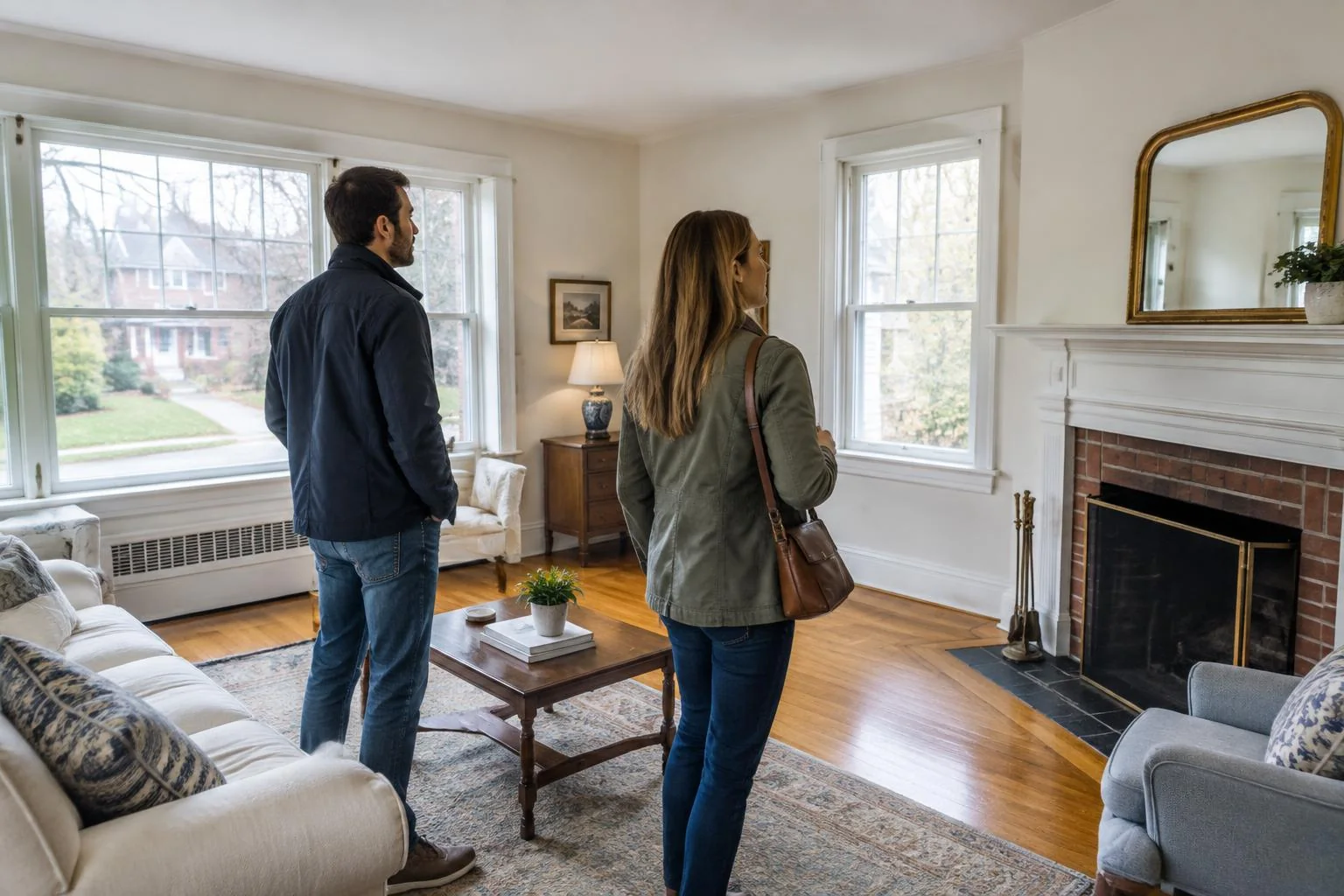
So you tour a home in Philly or Delaware County.
You like it.
Then you get back in the car.
You reopen the listing.
Your friend points something out. Your parents ask a question. You remember something you liked better about another house.
Twenty minutes later, you’re wondering why you ever liked this one.
That’s decision whiplash.
And touring more houses doesn’t necessarily fix it.
Watch: Why Every House You Tour Starts Feeling Wrong
The big idea in the video is simple:
Before you keep looking for the right house, you need a better way to judge the houses you’re seeing.
Why Do First-Time Buyers Second-Guess Every House?
Because most people start touring homes with a list of features instead of a decision filter.
Three bedrooms.
Two bathrooms.
Parking.
Updated kitchen.
Finished basement.
Under a certain price.
Those things help narrow the listings you see online. They don’t necessarily tell you whether you should actually buy one.
Once you're standing inside a real house, the decision gets more complicated.
Maybe the Philadelphia rowhome is smaller than you wanted, but you love the location.
Maybe the Delco twin isn't as exciting, but the layout works significantly better for your everyday life.
Maybe the beautifully renovated house you loved online just does absolutely nothing for you in person.
That's normal.
You’re learning the difference between what you thought mattered and what actually matters when you're standing inside the house.
Stop Looking for a House That Checks Every Box
One of the easiest ways to make yourself miserable during a home search is to accidentally create a house that doesn't exist.
You tour House A and love the kitchen.
House B has the better yard.
House C has the better street.
House D has the basement.
Then you compare House E against the imaginary house you created using the best parts of A, B, C and D.
Of course House E loses.
That's not useful comparison.
Every property should be evaluated as its own complete decision.
The question isn't:
“Does this house have everything I've liked about every other house?”
It's:
“Do the tradeoffs of this house make sense for the life I actually live?”
That question is much more useful.
Build a Decision Filter Before Your Next Showing
You don't need a 30-item checklist.
You need to know what you're protecting.
Before your next showing, finish this sentence:
“This home would be worth seriously considering if it protects ______.”
Maybe that's your monthly budget.
Maybe it's location.
Maybe you need enough space to stay for several years.
Maybe you care more about having a driveway than having a renovated kitchen.
Maybe you're willing to accept an older home, but you don't want a major renovation project.
There's no universal right answer.
That's the point.
Your filter should reflect your priorities, not someone else's.
Then, immediately after the showing, finish another sentence:
“The thing I can't ignore about this house is ______.”
Now you have something useful to discuss.
Instead of:
“I don't know. Something just feels off.”
You can identify what actually worked and what didn't.
Be Careful Who Gets a Vote
Your parents and friends probably mean well.
That doesn't mean they should all get equal influence over your home search.
The moment you send a listing to six people and ask:
“What do you think?”
You've basically opened a public comment section on the largest purchase of your life.
One person hates the kitchen.
Someone thinks the taxes are too high.
Someone else doesn't like the town.
Your dad notices the roof.
Your friend sends you another listing that's $75,000 more expensive and says, “Why don't you just buy something like this?”
Now you're evaluating everyone else's reaction instead of your own.
Outside opinions can absolutely be useful.
Just give people a job.
If someone understands your lifestyle extremely well, ask whether they see something you're overlooking.
If someone is particularly knowledgeable about a specific issue, ask about that issue.
Instead of:
“What do you think of this house?”
Try:
“I like this house, but I'm unsure about this one thing. What do you think about that?”
You're asking for perspective without handing someone else the steering wheel.
Is Feeling Unsure About a House a Red Flag?
Not necessarily.
This is an important distinction.
A concern usually has a name.
“The bedrooms are too small.”
“The commute doesn't work.”
“The property needs more work than I want to take on.”
“The monthly cost doesn't fit what I'm comfortable spending.”
Those are things you can evaluate.
Uncertainty is different.
Sometimes you're unsure simply because buying the house suddenly became real.
You don't have to turn every weird feeling in the driveway into an immediate yes or no.
Go home.
Eat something.
Get away from the property for a little while.
Then ask yourself what still bothers you.
If you can identify the concern, investigate it.
If the feeling disappears once the excitement of the showing wears off, it may not have been the dealbreaker you thought it was.
Learn From Showings Without Letting Them Rewrite Your Entire Search
Your priorities should change as you tour homes.
That's part of the process.
Maybe you thought you needed a finished basement until you toured one and realized you would rather have a better first-floor layout.
Maybe you were convinced you needed a detached house until you saw a twin that worked surprisingly well.
Maybe a certain Philadelphia neighborhood or Delaware County community feels completely different in person than it did while scrolling listings.
That's useful information.
But there's a difference between learning and spiraling.
Learning sounds like:
“I thought this mattered, but after seeing it in person, I realized something else matters more.”
Spiraling sounds like:
“I don't even know what I want anymore.”
If you've reached the second one, touring another five houses this weekend probably isn't the solution.
What If Every House Still Feels Wrong?
Stop for a minute.
Not forever.
Just long enough to figure out what the homes are actually telling you.
Ask yourself:
What has consistently worked?
What has consistently bothered me?
Which compromises have been easier than I expected?
Which compromises keep bothering me?
Have my priorities actually changed?
Am I rejecting homes because they don't work—or because choosing one feels scary?
That last question matters.
Continuing to search can feel safe because you never have to choose.
There's always another listing coming.
Another open house.
Another possibility.
But buying a home eventually means choosing one imperfect option over all the other imperfect options.
You're not looking for a house that eliminates every doubt.
You're looking for a house whose tradeoffs you understand and are comfortable accepting.
What Should You Look for During the Actual Home Tour?
This article is about deciding whether a home works for you.
There's another side to the showing: evaluating the actual property.
You should also pay attention to the home's visible condition, layout, basement, windows, moisture clues, major systems, parking, storage and other property-specific factors.
I've broken that down separately in my guide:
What to Look for When Touring a House
That article is designed to help you look beyond countertops and staging and evaluate the physical property more carefully.
A showing also isn't a replacement for a professional home inspection. It's an opportunity to decide whether the property deserves further consideration and identify questions that may need answers.
The Two-Sentence Test
Before your next showing, try this.
Before walking inside:
“This home would be worth considering if it protects __________.”
After leaving:
“The thing I can't ignore is __________.”
That's it.
You don't need to decide your entire future standing in the driveway.
But you should be getting clearer after each showing, not more scattered.
The best first-time buyers aren't the people who magically know exactly what they want from day one.
They're the people who learn what matters as they go—and develop enough confidence in their own judgment to recognize when a workable house finally shows up.

About the author
Tom Fior | Philadelphia & Delaware County Realtor
Tom is a Realtor with Coldwell Banker Realty (The Steven Eckell Team) helping buyers, first-time buyers, sellers and move-up homeowners across Philadelphia, Delaware County and the surrounding suburbs. Guidance first. Pressure never.
Have questions about your move? Let's talk.