
First-Time Home Buyers
First-Time Home Buyer in Philadelphia or Delaware County: Where Do I Start?
Thinking about buying your first house usually starts the same way.
By Tom FiorPublished Updated 7 min read
Last reviewed:
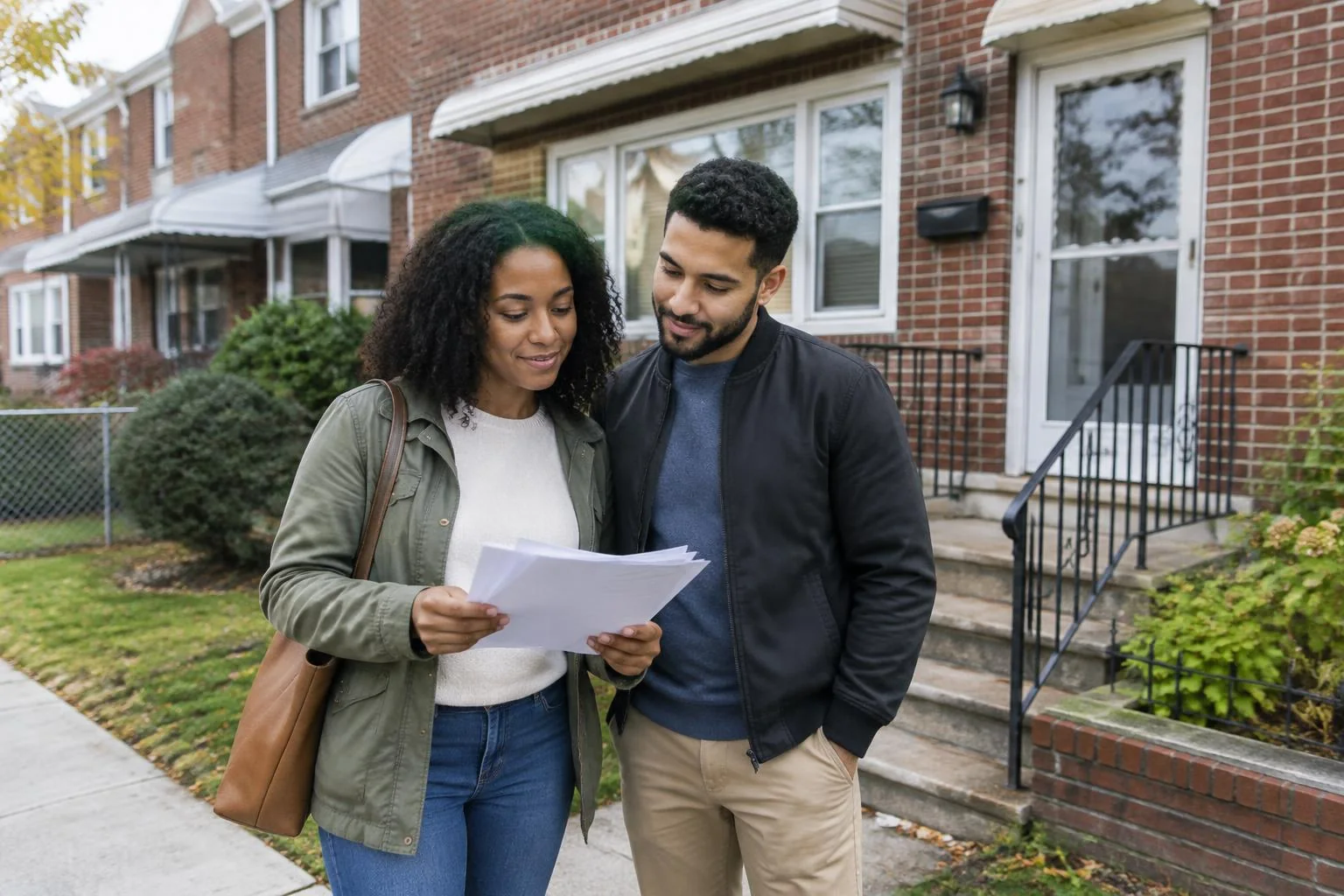
You look at homes online, start wondering what you could afford, and suddenly have 20 questions.
Do I need to get preapproved first? How much money do I need? When should I talk to a Realtor? What happens once I actually find a house?
You don’t need to understand the entire process before you start.
Here’s the part that actually matters.
What is the first step to buying a house?
Quick answer
Start by figuring out your approximate timeline, what you’d be comfortable spending each month, and what you actually need from a home. Then get a Realtor and mortgage lender involved early enough to help with their respective parts of the process.
Your lender handles the financing: preapproval, loan options, qualification requirements, rates and your actual mortgage numbers.
Your Realtor handles the real-estate side: understanding the market, comparing areas and homes, touring properties, writing offers, inspections, negotiations and getting you through the transaction.
You don’t need to worry about which one you call first.
You just want both pieces in place before you seriously start shopping.
What are the steps to buying a house for the first time?
Here’s the process without making it more complicated than it needs to be:
- Figure out your timeline and priorities.
- Decide what monthly housing cost you’re comfortable with.
- Talk with a lender and get preapproved.
- Ask about any first-time-buyer or assistance options that may apply to you.
- Figure out what your budget actually buys.
- Tour homes and learn what to look for.
- Make an offer when the right house comes along.
- Complete inspections, financing, appraisal, title work and the other requirements of your transaction.
- Final walkthrough and settlement.
That’s the big picture.
Now let’s make the important parts a little more useful.
1. Start with what you actually need
Before getting lost in listings, think about what you’re trying to accomplish.
- When do you want to move?
- How many bedrooms do you realistically need?
- How important are parking, outdoor space, commute and walkability?
- Would you consider a rowhome, twin or condo, or are you set on a single-family house?
And if you’re considering both Philadelphia and Delaware County, what are you hoping to gain or keep by choosing one over the other?
You don’t need the perfect wish list.
Figure out your must-haves, your nice-to-haves, and the things you don’t really care about.
2. Think about monthly cost, not just the price of the house
Two homes with the same asking price can have very different monthly costs.
Your housing cost can include more than principal and interest. Property taxes, homeowners insurance, mortgage insurance and HOA or condo fees can all affect the number.
This matters locally.
Property taxes can vary considerably between Delaware County municipalities. A Philadelphia condo may have a monthly condo fee while a similarly priced rowhome doesn’t.
So don’t start with: “What’s the most expensive house I can buy?”
Start with: “What am I actually comfortable spending on housing every month?”
Then let your lender help you understand how that fits with your financing.
3. Get preapproved before you seriously shop
You don’t need to be preapproved to start learning about the market, but you should understand your financing before you’re seriously touring homes and preparing to make offers.
A mortgage lender can review your situation and explain your potential financing, loan options, down-payment requirements and other mortgage costs.
They can also tell you whether there are first-time-buyer or assistance programs worth exploring for your situation.
You don’t need to become an expert on every mortgage or assistance program you find online.
Ask the lender what actually applies to you.
And remember: a preapproval is not final loan approval.
4. Figure out what your budget actually buys
This is where Zillow becomes useful instead of just addictive.
If you’re considering Philadelphia and Delaware County, the same budget can produce very different options.
- You might be comparing a Philadelphia rowhome with a twin or single-family home in Delco.
- You may trade walkability for a driveway.
- You may trade a shorter commute for more space.
- You may choose an updated smaller home over a larger house that needs work.
There’s usually a tradeoff somewhere.
The goal isn’t finding the mythical perfect house.
It’s figuring out which tradeoffs actually matter to you.
5. Look past the listing photos
A new kitchen is easy to notice.
The less exciting parts of a house matter too.
When you’re touring, pay attention to the overall condition of the home and things like the roof, heating and cooling systems, electrical, plumbing, windows, basement and visible signs of water or deferred maintenance.
You aren’t expected to perform your own home inspection.
You should simply be looking at more than paint colors and countertops.
And read the seller’s property disclosure when one is provided.
It isn’t a replacement for an inspection or your own due diligence, but it can contain important information about the property that deserves your attention.
6. Understand the offer before you make one
When you find the right house, don’t immediately jump to: “How much over asking do I need to go?”
First understand the situation.
- What have comparable homes sold for?
- How long has this one been available?
- Is there competition?
- What condition is the property in?
- What terms and protections matter to you?
The highest offer doesn’t automatically win every house, and winning shouldn’t mean taking risks you don’t understand.
The goal is to put together an offer that makes sense for that property, that situation and you.
I’ve covered how to strengthen an offer without automatically waiving the inspection in more detail.
What happens after my offer is accepted?
Quick answer
Once you’re under contract, the focus shifts from finding the house to completing the requirements of your Agreement of Sale, financing and due diligence.
Depending on your transaction, that may include:
- Earnest money
- Inspections
- Mortgage processing
- Appraisal
- Title work
- Homeowners insurance
- Final loan approval
- Final walkthrough
- Settlement
Several of these things may happen at the same time.
You don’t need to memorize every step before buying.
You do need to understand what’s happening as you go through it.
That’s what the professionals involved in your transaction are there to help with.
Should I talk to a Realtor or lender first?
Quick answer
Either is fine. You don’t need to do this in a perfect order.
If your questions are primarily about credit, qualification, loan programs, rates or financing, talk to a lender.
If you’re trying to understand the buying process, areas, homes, the market, offers or what you should be doing before you’re ready, those are conversations to have with a Realtor.
Eventually, you want both involved.
Your lender handles your mortgage.
Your Realtor handles the real-estate side.
How much money do I need to buy my first house?
Quick answer
There isn’t one number that applies to every first-time buyer, and your down payment isn’t the only expense involved.
Your upfront costs can include a down payment, closing costs, earnest money, inspections and other transaction or financing expenses.
I’ve broken this question down separately in my guide to how much money you need to buy a house in Delaware County, PA.
One thing you don’t need is an automatic 20% down payment.
Different mortgage programs have different requirements. Let your lender explain which options actually apply to you.
Is buying in Philadelphia different from Delaware County?
Quick answer
The basic buying process is similar, but the homes, costs and lifestyle tradeoffs can be very different.
In Philadelphia, you may be comparing rowhomes, condos, twins and single-family homes depending on the neighborhood. Parking, walkability, public transportation and older housing stock may all factor into the decision.
Delaware County isn’t one uniform suburban market either.
A search in Havertown can look very different from Media, Springfield, Ridley Park or another part of Delco.
Housing stock, taxes, lot sizes, commutes and prices can all vary.
So instead of asking: “What’s the best place to buy?”
Ask: “Which area gives me the combination of home, location, monthly cost and lifestyle I actually want?”
That’s a much more useful question.
What if I’m not ready yet?
Quick answer
Then don’t buy yet.
Learning about the process doesn’t obligate you to buy a house.
- Maybe you need more time to save.
- Maybe your lease doesn’t end for another year.
- Maybe your lender gives you something to work on.
- Maybe you aren’t sure whether you want Philadelphia or the suburbs yet.
That’s fine.
Starting early gives you time to figure those things out without rushing.
Your first home starts with a plan, not a listing
You don’t need to know everything before you start.
- Figure out what you need.
- Understand the monthly cost you’re comfortable with.
- Get the financing figured out.
- Learn what your money actually buys.
Then take the search one house at a time.
I’m Tom Fior, a Realtor with Coldwell Banker Realty and The Steven Eckell Team, and I work with first-time buyers throughout Philadelphia and Delaware County.
My job is to help you understand the real-estate side of the process, evaluate your options and make informed decisions without making you feel like you should already know how all of this works.

About the author
Tom Fior | Philadelphia & Delaware County Realtor
Tom is a Realtor with Coldwell Banker Realty (The Steven Eckell Team) helping buyers, first-time buyers, sellers and move-up homeowners across Philadelphia, Delaware County and the surrounding suburbs. Guidance first. Pressure never.
Have questions about your move? Let's talk.