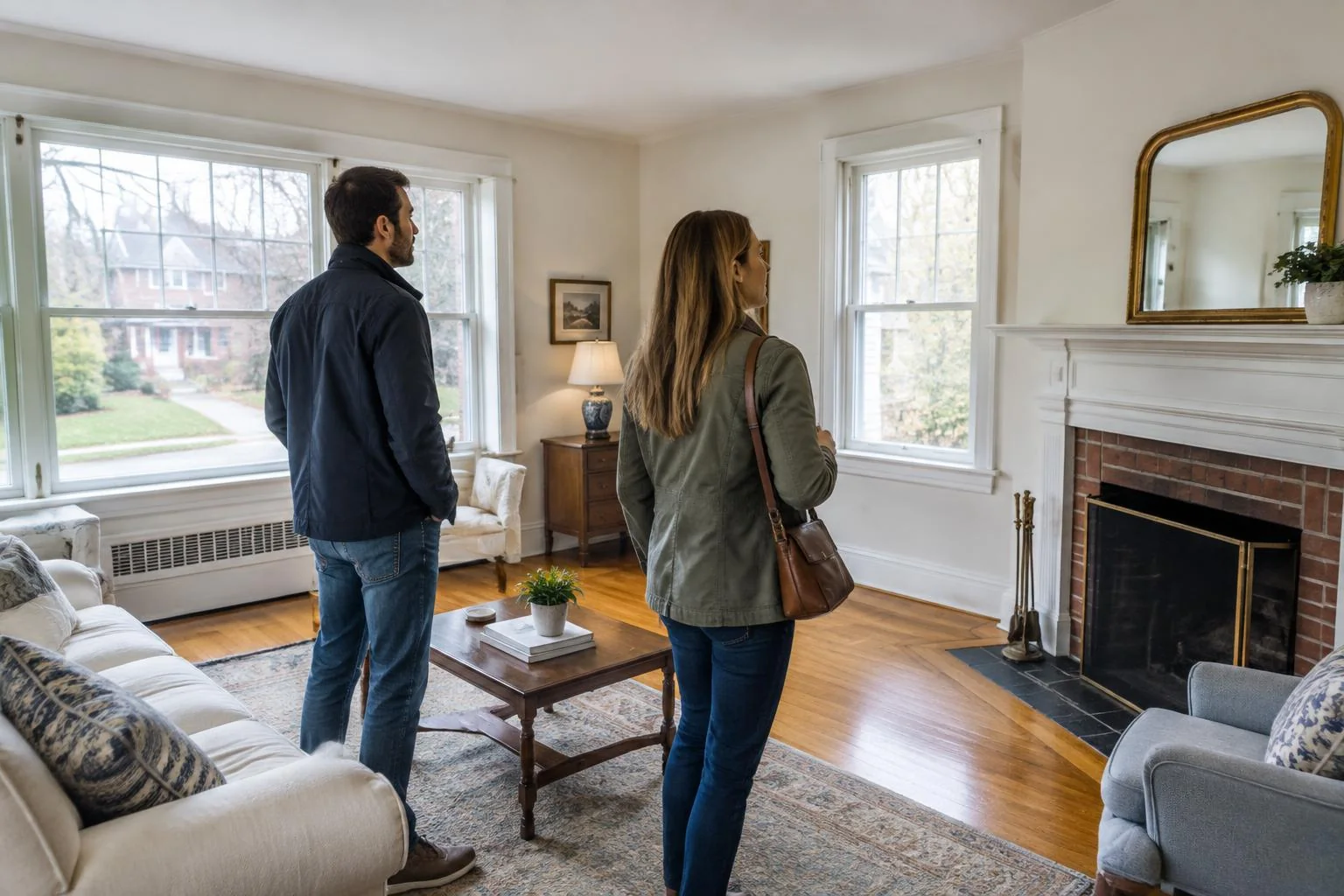
First-Time Home Buyers
How Long Does It Take to Buy a House in Delaware County, PA?
If you are starting from the planning stage, buying a house often takes several months, not just the few weeks between an accepted offer and closing.
By Tom FiorPublished 8 min read
Realtor with Coldwell Banker Realty and The Steven Eckell Team
Last reviewed:

For many first-time buyers in Delaware County or Philadelphia, a reasonable planning window is roughly three to nine months. Some buyers move faster. Others need more time to improve their finances, narrow their search, find the right home or get an offer accepted.
The part people usually underestimate is everything that happens before the closing countdown begins.
The Short Answer: Work Backward From Your Move-In Date
Here is a practical planning framework:
| Stage | Possible planning range | What happens |
|---|---|---|
| Financial preparation | A few weeks to several months | Review savings, credit, debts and a comfortable monthly payment |
| Pre-approval and planning | A few days to a few weeks | Speak with a lender, gather documents and define a realistic price range |
| Area research and home search | A few weeks to several months | Compare locations, tour homes and adjust priorities |
| Offers and negotiations | A few days to several weeks or longer | Evaluate homes, write offers and negotiate terms |
| Under contract to closing | Often about 30–45 days, but variable | Complete inspections, title work, underwriting and appraisal when required |
These stages can overlap, and none of these ranges is guaranteed. A buyer who already has their finances organized and finds a home quickly may move much faster. A buyer with a strict location, property type or budget may need a longer search.
The main point is simple: your timeline starts before your first showing.
What Actually Happens Before You Buy a House?
1. Financial preparation
Before touring homes, get a clear picture of:
- What you have saved
- What you want to keep in reserve after closing
- What monthly payment feels comfortable to you
- Whether there are credit or debt issues you want a lender to review
- Whether buyer-assistance options may be worth discussing with a qualified lender
This stage could be short if your finances are already organized. It could take several months if you need time to save, correct a credit-report error or make another financial adjustment.
That is not lost time. It is usually much better to learn what needs attention before you are emotionally attached to a house.
If cash planning is still unclear, read how much money you may need to buy a house in Delaware County.
2. Mortgage pre-approval
A pre-approval helps turn a general idea into a usable buying plan. A lender reviews your financial information and explains the financing options and estimated costs that may apply to your situation.
The speed depends partly on how quickly you provide the requested documentation and whether the lender needs additional information. A pre-approval is not final loan approval, and loan terms can change.
Your lender should answer the lending questions. My role as your Realtor is to help connect those numbers to the homes, locations and offer strategies you are actually considering.
3. Choosing where to look
“Delaware County” is not one uniform housing market.
A buyer comparing Havertown, Springfield, Media, Wallingford, Ridley Park and Drexel Hill may encounter different price ranges, tax figures, housing styles, parking arrangements and levels of competition. Philadelphia adds another set of considerations, including neighborhood-by-neighborhood housing types and property-specific costs.
You do not need to pick one town immediately. You should, however, understand your non-negotiables before opening every listing within a 40-minute radius and calling that a strategy.
Think through:
- Your comfortable total monthly payment
- Commute and transportation needs
- Space and layout
- Parking
- Property condition
- Outdoor space
- How much work you are willing to take on
This can save a lot of wasted weekends.
4. Searching and touring
The home search is the hardest part to predict.
You might find a strong option during your first weekend. You might tour for three months. You might find the right house quickly and lose it in competition, then need to continue searching.
Inventory also changes. A plan that works with the homes available today may need to adjust next month.
The goal is not to see the most houses possible. It is to learn enough from each showing to make the next decision better. Before you begin, use this guide on what to look for when touring a house.
5. Making offers
Finding a house and successfully getting it under contract are two different milestones.
An offer involves more than price. The deposit structure, financing, inspection terms, settlement date and other contingencies can all matter. In a competitive situation, buyers may feel pressure to take risks they do not fully understand.
I do not believe the solution is automatically waiving every protection. The goal is to understand the tradeoffs and write the strongest offer that still makes sense for you. Read more about making a competitive offer without automatically waiving the inspection.
If the first offer is not accepted, the timeline continues. That can be frustrating, but it is better than forcing the wrong house or the wrong terms just to meet an arbitrary deadline.
6. Inspections and due diligence
Once an offer is accepted, the transaction moves quickly.
Inspection rights, deadlines and elected inspections depend on the signed agreement. Buyers may choose a general home inspection and, depending on the property and agreement, other evaluations such as sewer, radon, wood-destroying insects or specialized inspections.
The results may lead to questions, additional evaluation, negotiation or a decision under the terms of the contract. Older housing stock throughout Delaware County and Philadelphia makes this a stage worth taking seriously, not treating as a box to check.
7. Financing, appraisal and title work
While due diligence is happening, the lender and title professionals are also working.
The mortgage process may include underwriting, updated financial documents, verification of information and an appraisal when required. Title work is completed so ownership, liens and other recorded matters can be addressed for settlement.
Do not make major financial changes during this period without speaking to your lender. New debt, job changes or unexplained movement of money can create questions and delays.
Federal disclosure rules also create specific timing requirements. The Consumer Financial Protection Bureau says a lender generally must provide a Loan Estimate within three business days after receiving a mortgage application. For most covered mortgages, the lender must provide the Closing Disclosure at least three business days before closing so the buyer can review the final loan terms and costs.
8. Final walkthrough and closing
Shortly before settlement, the buyer typically completes a final walkthrough to confirm the property is in the expected condition and that agreed-upon items have been addressed.
At closing, the required documents are signed, funds are handled through the appropriate closing professionals and ownership transfers.
That is the finish line. It is not the starting line.
When Should You Start If You Want to Move in 3–9 Months?
If you want to move in about nine months
Start now with financial preparation and a planning conversation. You have time to review your numbers, explore locations and solve avoidable problems without rushing.
If you want to move in about six months
You should be organizing your finances, speaking with a lender and narrowing the search area. Depending on your situation, you may also be ready to begin monitoring listings or touring.
If you want to move in about three months
You likely need to move from casual thinking to an active plan. Pre-approval, search criteria and availability for showings should be handled quickly. A three-month purchase may be possible, but there is less room for a long search, rejected offers or transaction delays.
If you need to move sooner than three months
It may still be possible, especially if you are financially prepared and flexible. But do not promise a landlord, moving company or anyone else a firm date before you understand the contract and financing timeline.
What Can Delay a Home Purchase?
Common timeline variables include:
- Needing more time to prepare financially
- Waiting for the right type of property to become available
- A narrow location or budget
- Competing offers
- Inspection findings or additional evaluations
- Appraisal issues when an appraisal is required
- Missing or changing lender documentation
- Title or property-record issues
- Negotiations between buyer and seller
- A settlement date chosen to meet either party’s needs
Some delays are preventable. Others are simply part of buying a specific property with multiple parties and deadlines involved.
What I Tell First-Time Buyers in Delaware County
Do not wait until you want to move next month to begin asking questions.
You do not need a pre-approval in hand just to have an initial conversation with me. You also do not need to know the exact town, price or date.
What helps is having a target:
“I would like to be moved by March. What needs to happen between now and then?”
From there, we can work backward. We can identify which questions belong with a lender, when the active search should begin and how much flexibility you should build into your plans.
That is a much calmer way to buy than finding a house online first and trying to assemble the entire process afterward.
Frequently Asked Questions
- How long does it take to close on a house after an offer is accepted?
- Many financed purchases are planned around approximately 30–45 days from accepted offer to closing, but the actual period is established by the agreement and can be shorter or longer. Financing, appraisal, inspections, title work and the parties’ chosen settlement date can all affect it.
- Can I buy a house within three months?
- Possibly. A buyer who is financially prepared, obtains a pre-approval promptly, has realistic search criteria and finds an acceptable property quickly may be able to close within three months. There is no guarantee because the search and offer stages are unpredictable.
- Should I contact a Realtor before I am pre-approved?
- Yes. An early conversation can help you understand the process, define a target timeline and prepare the right questions for a lender. You should obtain an appropriate pre-approval before submitting an offer that relies on mortgage financing.
- When should I start looking if my lease ends soon?
- Start planning several months before the lease ends. The right date depends on your finances, search criteria, lease obligations and likely closing period. Avoid assuming you can begin touring 30 days before the lease expires and close without overlap or delay.
- What part of buying a house usually takes the longest?
- The home search is often the least predictable stage. Pre-approval and contract-to-closing work follow defined processes, but nobody can guarantee when the right property will appear or when an offer will be accepted.

About the author
Tom Fior | Philadelphia & Delaware County Realtor
Tom is a Realtor with Coldwell Banker Realty (The Steven Eckell Team) helping buyers, first-time buyers, sellers and move-up homeowners across Philadelphia, Delaware County and the surrounding suburbs. Guidance first. Pressure never.
Have questions about your move? Let's talk.