Relocation
Moving From Florida to Philadelphia? 6 Things That Will Surprise You
If you’re moving from Florida to Philadelphia, the biggest adjustment probably isn’t going to be the weather.
By Tom FiorPublished 12 min read
Realtor · City to Suburbs · Coldwell Banker Realty · The Steven Eckell Team
Last reviewed:
Recommended next review: September 2027 or sooner if Pennsylvania or Philadelphia tax rates materially change.
Yes, winter is coming.
But the house itself may be completely different from what you’re used to. Your taxes change. Your insurance questions change. Your relationship with your car might change. And depending on where you land, you may suddenly own something you’ve never had to think about before:
A basement.
If you’re coming from Miami, Fort Lauderdale, Tampa, Orlando, Jacksonville, Sarasota, Naples or anywhere else in Florida, here are six things I’d want you to understand before you start seriously shopping for a home in Philadelphia or the surrounding suburbs.
Watch: Moving From Florida to Philadelphia? 6 Things That Will Surprise You
Quick Answer: What Should You Know Before Moving From Florida to Philadelphia?
Moving from Florida to the Philadelphia area means adjusting to more than colder weather.
Expect older and more varied housing, basements, different home-maintenance concerns, Pennsylvania and potentially Philadelphia-specific taxes, a much larger public-transit network, different parking expectations and four-season homeownership.
One of the biggest decisions is also whether you actually want to live in Philadelphia or in a surrounding suburb such as Delaware County.
Don’t start by asking which area is “best.”
Start by figuring out what you want your normal Tuesday to look like.
1. The Houses Can Be VERY Different
This may be the first thing you notice when you start scrolling through listings.
Depending on where you’re coming from in Florida, you may be used to newer construction, slab foundations, planned communities, stucco or block construction, attached garages, one-story layouts and HOAs.
Philadelphia can look completely different.
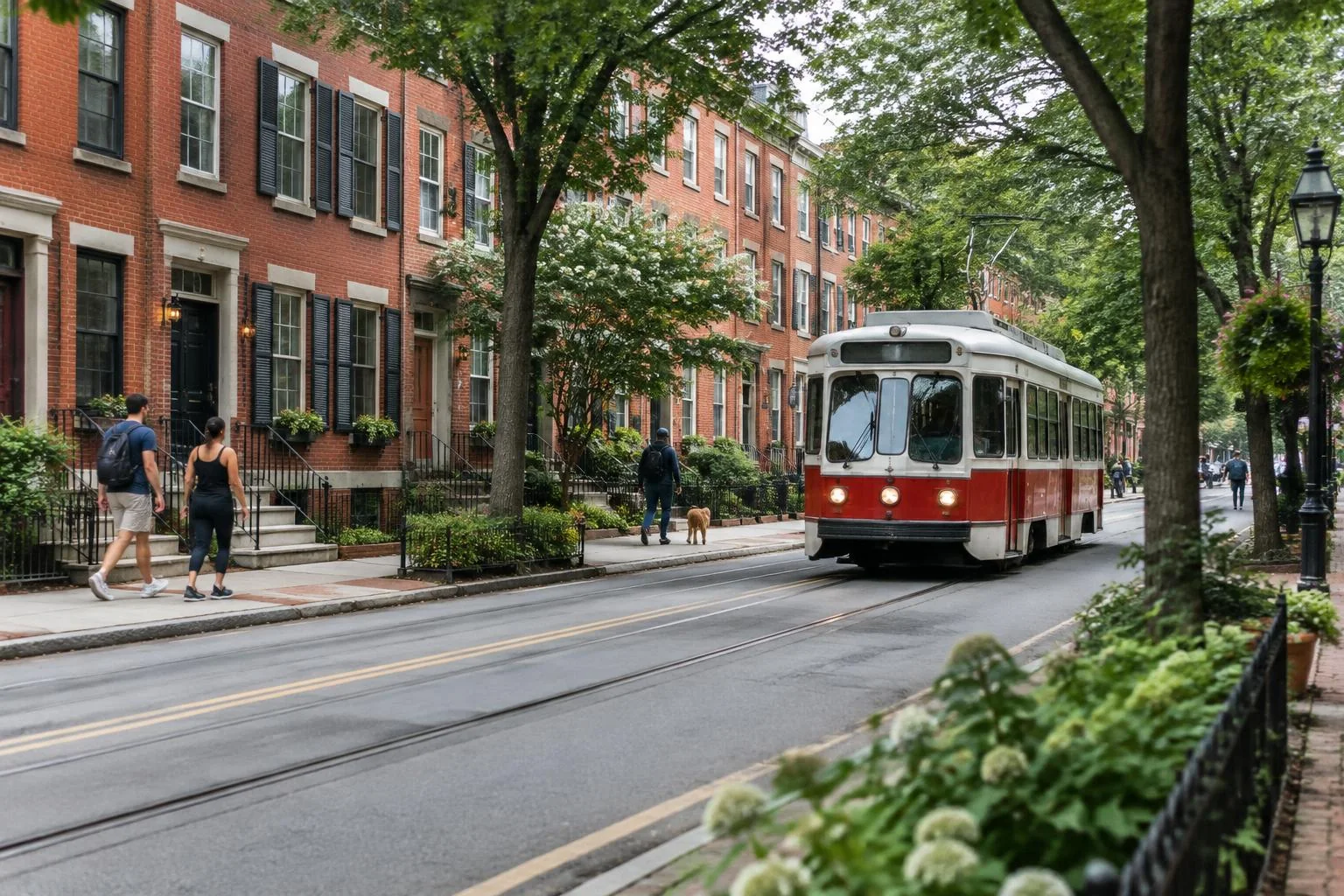
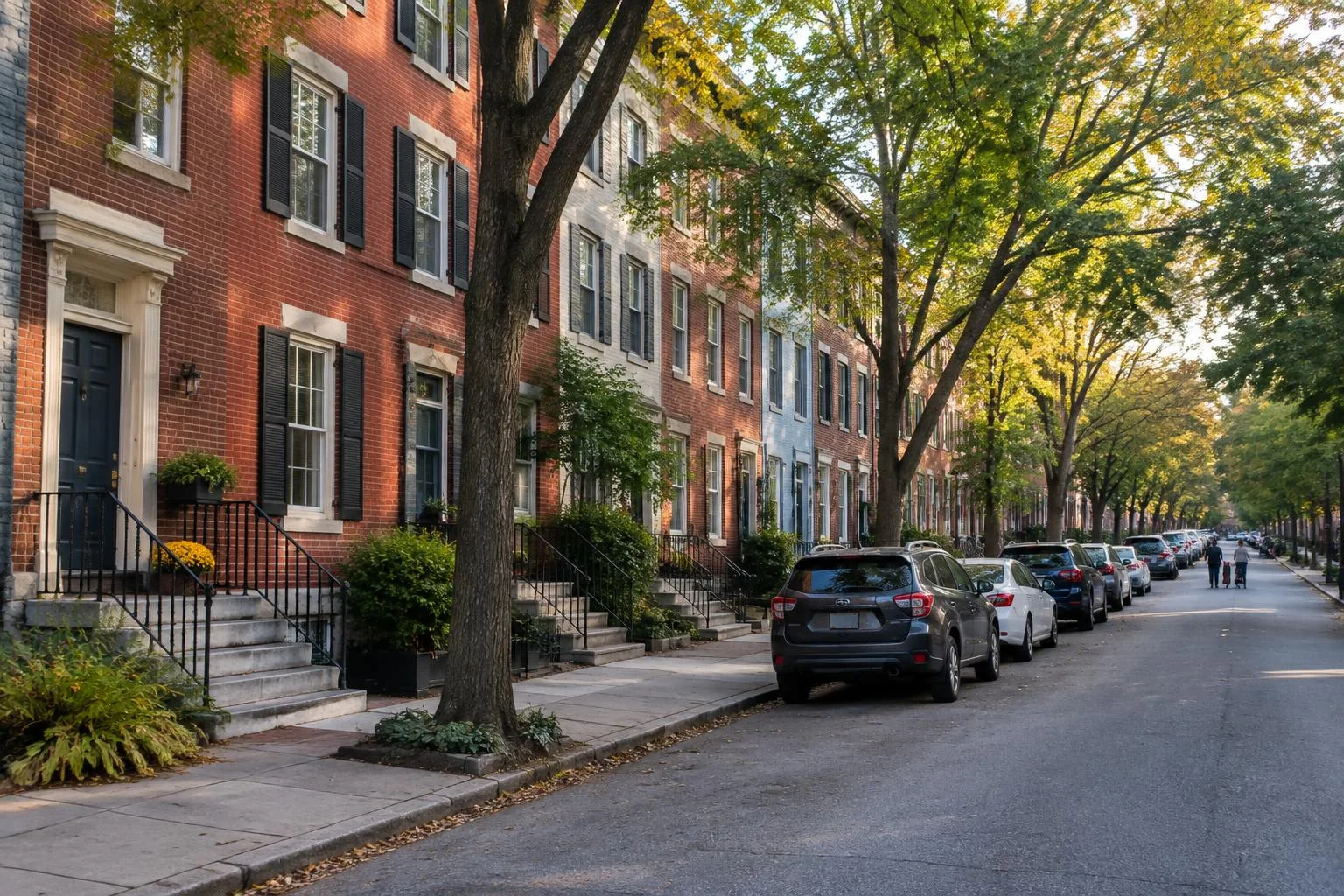
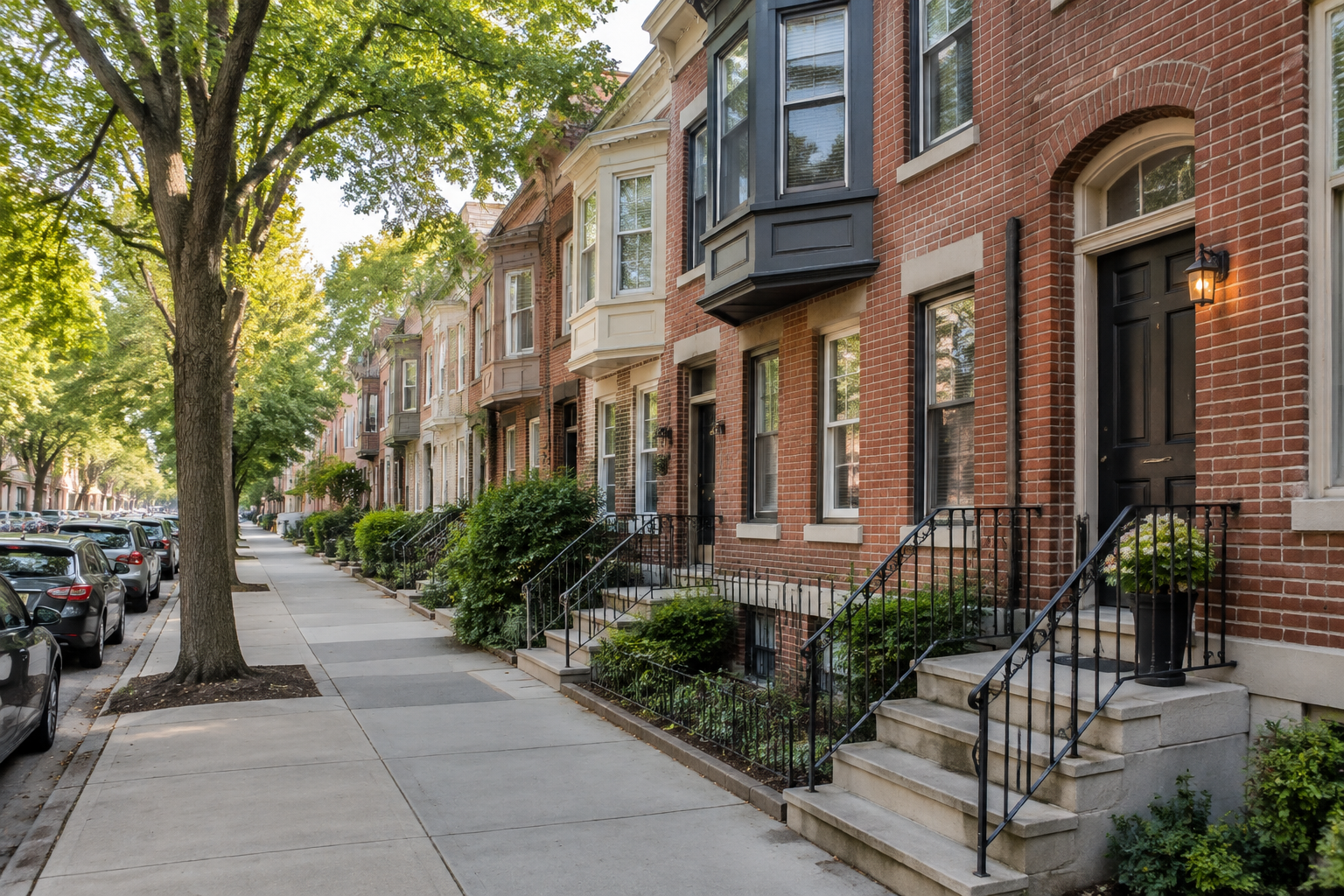
Rowhomes are a major part of the city’s housing stock. You’ll also find twins, stone homes, condos, newer townhomes and detached properties depending on where you’re looking.
And a lot of Philadelphia housing is old.
That’s not automatically a bad thing.
There are 80-, 100- and even 100-plus-year-old houses around Philadelphia that have been cared for extremely well.
There are also beautifully renovated houses where the kitchen photographs perfectly but the expensive stuff behind the walls deserves much more attention.
That’s why I care less about whether someone installed quartz countertops six months ago and more about questions like:
- What does the electrical system look like?
- What type of plumbing is present?
- How old is the roof?
- How is the house heated?
- How is it cooled?
- Are there visible signs of moisture?
- What information is available about the sewer line?
- If the house was renovated, what work was actually completed?
You aren’t just buying the kitchen.
You’re buying everything holding the kitchen up.
If you want something closer to the housing setup you’re used to in Florida — more detached homes, yards, driveways, garages and separation between neighbors — your search may naturally start moving outside some of Philadelphia’s denser neighborhoods.
That’s where places throughout Delaware County and the surrounding suburbs become worth comparing with the city.
2. Congratulations. You Might Own a Basement Now.
This is one of my favorite adjustments for Florida buyers.
Basements are completely normal around Philadelphia.
Some are beautifully finished and function almost like another floor of the house.
Some contain the washer, dryer, heater, electrical panel, storage and approximately 47 things the previous owner decided not to throw away.
Either way, if you’ve never owned a basement before, you need to understand what you’re looking at.
Because it’s below grade, water management matters.
During a showing you may encounter things such as:
- Sump pumps
- Interior drainage systems
- Dehumidifiers
- Older masonry or stone foundations
- Water staining
- Efflorescence or white residue on masonry
- Freshly painted foundation walls
- Evidence of previous water management work
None of those things, by itself, tells you whether you should or shouldn’t buy the house.
It tells you to ask questions and investigate.
A showing also isn’t a substitute for a professional home inspection.
That’s especially important when you’re relocating from an area where the housing construction you’re used to may be completely different.
Be especially thoughtful about finished basements
A finished basement can be a great feature.
It can also make it harder to see portions of the foundation and other components that would otherwise be exposed.
So don’t stop at:
“This basement looks amazing.”
Ask what you can learn about how water is managed, whether there has been previous moisture intrusion, what work was completed and what may be concealed behind finished surfaces.
The funny part is that Florida homeowners already know to respect water.
You’re just going to start asking different water questions.
3. Your Home-Insurance Concerns Change
If you’ve owned a house in Florida, home insurance probably doesn’t need an introduction.
Hurricanes, wind, flooding, roof age, deductibles, carrier availability and premiums can all become part of the ownership conversation.
Move to Pennsylvania and the risk profile changes.
That does not mean insurance stops mattering.
Depending on the property, an insurer may care about factors such as the roof, electrical system, plumbing, heating system, prior claims and other characteristics of the home. Flood risk can still matter as well depending on the property’s location.
This is why comparing a Florida home with a Philadelphia home using only the list price doesn’t tell you enough.
I want a relocation buyer thinking about the total ownership picture:
- Purchase price.
- Mortgage payment.
- Property taxes.
- Insurance.
- Utilities.
- Maintenance.
- Transportation.
- And the actual condition of the house.
The cheapest house you find online isn’t automatically the cheapest house to own.
Get property-specific insurance guidance and quotes from the appropriate insurance professionals before making assumptions about coverage or cost.
4. Florida to Pennsylvania Changes the Tax Conversation
This is one of the biggest differences Florida buyers should understand early.
Florida does not impose an individual state income tax.
Pennsylvania does.
As of September 2026, Pennsylvania’s personal income-tax rate is 3.07%.
If you live in Philadelphia, there’s another layer to understand.
As of July 1, 2026, Philadelphia’s Wage Tax rate is 3.735% for residents. A different rate applies to qualifying nonresidents working in Philadelphia.
Your individual situation can depend on where you live, where you work and how your income is earned, so this is something to verify with the appropriate tax professional.
But it matters to your home search for a simple reason:
Where you live can change more than your mortgage payment.
Philadelphia and the surrounding suburbs aren’t financially identical.
Property taxes also vary by property and municipality.
And if you’re purchasing real estate in Philadelphia, the city has a Realty Transfer Tax. As of September 2026, the combined Philadelphia and Pennsylvania Realty Transfer Tax rate is 4.578%. In a typical sale it is commonly split between buyer and seller, although that split is not legally required.
The point isn’t that Philadelphia or the suburbs are automatically cheaper.
It’s that you need to compare the entire picture.
Two houses can both cost $500,000 and produce very different monthly and transaction costs depending on where they’re located.
If you’re moving from Florida, figure that out before deciding where you want to buy.
5. Philadelphia Can Be Much Less Car-Dependent
This depends heavily on where in Florida you’re coming from.
But if your current routine is:
- Coffee? Drive.
- Groceries? Drive.
- Dinner? Drive.
- Gym? Drive.
Philadelphia can be a major adjustment.
Depending on the neighborhood, you may be able to walk to restaurants, coffee shops, groceries, parks and public transportation.
SEPTA serves Philadelphia and the surrounding region with buses, rail, trolleys and Regional Rail.
That can completely change what you prioritize in a home.
But there’s a catch.
If you’re bringing a car, it still needs somewhere to live.
Some Philadelphia houses have garages.
Some have driveways or dedicated parking.
Plenty don’t.
Street parking may be completely normal.
And the parking situation can change dramatically depending on the neighborhood and even the block.
Don’t evaluate transportation from Google Maps alone
If you’re seriously considering an area, experience it.
See what parking looks like at night.
Try the commute you’d actually make.
Walk to the grocery store.
Figure out whether you’d realistically use the train that’s supposedly “close.”
Three blocks feels different in January than it does during a beautiful Saturday afternoon in May.
And if you’re reading this thinking:
Tom, absolutely not. Give me my driveway.
Fair.
That’s one reason Florida buyers should compare Philadelphia with Delaware County and the surrounding suburbs instead of assuming they need to live within city limits.
Depending on the location and budget, your options can shift toward twins and detached houses with yards, driveways and garages while still maintaining access to Philadelphia.
So don’t ask me:
What’s the best Philadelphia neighborhood?
I’d rather ask you:
What do you want your Tuesday to look like?
- Do you want to walk to dinner?
- Do you want a yard?
- Is a garage important?
- Where are you commuting?
- How much driving are you comfortable with?
- Do you want city density or more separation between neighbors?
You’re not just choosing a house.
You’re choosing the routine attached to it.
6. Four Seasons Affect the House, Not Just Your Wardrobe
Everyone is going to tell you to prepare for winter.
And yes, if you’re coming from South Florida, your first 30-degree morning may feel like a personal attack.
You’ll figure out the coat.
What I care about more is whether you understand how the house handles the seasons.
In Florida, the HVAC conversation understandably focuses heavily on air conditioning.
Around Philadelphia, you need to understand the heating system too.
Depending on the property, you may encounter:
- Forced-air heat
- Boilers
- Radiators
- Heat pumps
- Mini-splits
- Central air
- Or an older house containing some combination of systems added over the years
Ask what you’re buying.
Windows and insulation become more noticeable when it’s cold outside.
Roof and gutter maintenance matter.
Exterior plumbing and vulnerable pipes need to be protected from freezing temperatures.
Drainage and basement moisture matter during heavy rain.
Older masonry goes through seasonal temperature changes.
And here’s the part Florida buyers sometimes don’t expect:
Philadelphia summers can still be hot and humid.
You’re not necessarily escaping humidity.
You’re adding winter.
Tour the house for the season you’re NOT currently in
If you’re touring in May, think about January.
If you’re touring in January, think about the upstairs bedrooms in August.
Ask how the house is heated and cooled.
Look at the windows.
Understand which spaces are conditioned.
Think about drainage.
Think about maintenance.
Relocation buyers sometimes encounter things locals don’t think to explain because we’ve lived with them forever.
That’s exactly why these conversations should happen before you’re under contract.
Philadelphia or Delaware County: Which Makes More Sense Coming From Florida?
There isn’t a universal answer.
If you’re coming from a dense part of Miami and want walkability, restaurants and less dependence on your car, certain Philadelphia neighborhoods may feel like a natural fit.
If you’re coming from a suburban community outside Orlando, Tampa or Jacksonville and you’re used to a driveway, garage and more space between houses, parts of Delaware County may feel more familiar.
Neither is automatically better.
Compare the actual tradeoffs:
| Philadelphia | Delaware County / Suburbs |
|---|---|
| More urban options depending on neighborhood | More lower-density options depending on municipality |
| Extensive transit access in many areas | Regional Rail and other transit varies by location |
| Rowhomes and attached housing are common | More twins and detached homes in many communities |
| Street parking can be common | Driveways and garages are more common in many areas |
| City-specific tax considerations | Municipality-specific tax considerations |
| Walkability can be a major lifestyle feature | Car dependence varies significantly by community |
Those are broad differences, not guarantees.
Philadelphia itself has detached homes and driveways.
Delaware County has dense, walkable communities and attached homes.
That’s why the search should be based on the specific area and property — not simply “city versus suburbs.”
One More Difference Florida Movers Sometimes Overlook: Where Philadelphia Puts You
Moving here also changes your map.
Philadelphia sits in the Northeast Corridor with rail access toward cities including New York and Washington, D.C.
The Jersey Shore and Poconos create very different weekend options within the broader region.
That doesn’t make Philadelphia “better” than Florida.
It makes your lifestyle different.
And that’s really the question you should be trying to answer before buying:
Does the life attached to this house make sense for me?
Not just:
“Can I get more house here?”
Or:
“Is Philadelphia cheaper?”
My Advice Before You Start Looking at Houses From Florida
Don’t start with 75 saved listings.
Start with the move.
Figure out:
- Where you need to commute.
- What you want your normal week to look like.
- Whether you’re leaning toward Philadelphia or the suburbs.
- How important a driveway, garage and yard are.
- Whether walkability and public transportation matter.
- What type and age of house you’re comfortable owning.
- What the complete cost of living in each location looks like for your situation.
Then start looking at houses.
That order makes relocation a lot easier.
Moving From Florida to Philadelphia? Start With the Area, Not the House.
If you’re considering moving from Florida to Philadelphia, Delaware County or the surrounding suburbs, you do not need to know exactly where you want to live before reaching out.
That’s part of the process.
Tell me where you’re coming from, where you need to get to, what type of home you’re used to and what you want your life here to look like.
Then we can compare the city and suburbs, narrow the map and figure out which areas actually make sense before you start chasing listings.
I’m Tom Fior, a Realtor with Coldwell Banker Realty and The Steven Eckell Team. I help buyers relocating to Philadelphia and Delaware County understand the housing, neighborhoods and tradeoffs that come with moving here.
I’m not going to try to convince you Philadelphia is the right move.
I’d rather help you understand what the move actually looks like so you can decide for yourself.
Guidance First. Pressure Never.
Your next move starts with a conversation.
Frequently Asked Questions About Moving From Florida to Philadelphia
- What is the biggest adjustment when moving from Florida to Philadelphia?
- For home buyers, one of the biggest adjustments can be the housing itself. Philadelphia has a large amount of older housing, including rowhomes and properties with basements. Buyers coming from newer Florida communities may encounter different foundations, heating systems, parking arrangements, maintenance concerns and construction styles.
- Are taxes higher when moving from Florida to Philadelphia?
- The tax structure is different. Florida does not impose an individual state income tax, while Pennsylvania currently has a 3.07% personal income-tax rate. Philadelphia also imposes local taxes, including a Wage Tax. Your specific tax situation depends on factors including where you live, work and earn income, so confirm the impact with an appropriate tax professional.
- Should I live in Philadelphia or the suburbs if I’m moving from Florida?
- It depends on the lifestyle you want. Certain Philadelphia neighborhoods can offer more density, walkability and transit access. Parts of Delaware County and other suburbs can offer different combinations of detached housing, yards, driveways and garages. Start with your commute, budget, transportation needs, housing preferences and day-to-day priorities.
- Do Philadelphia homes have basements?
- Many Philadelphia-area homes have basements, although not every property does. Basements may be finished or unfinished and can contain mechanical equipment, laundry and storage. Buyers should pay attention to visible moisture clues and water-management systems and use appropriate inspections and due diligence when purchasing.
- Do I need a car after moving to Philadelphia?
- Not necessarily. Whether you need a car depends heavily on where you live, work and regularly travel. SEPTA provides public transportation throughout Philadelphia and the surrounding region. If you plan to keep a car, consider parking from the beginning of your home search rather than after choosing a property.
- Can I buy a Philadelphia-area house while I still live in Florida?
- Yes. A relocation search can begin before you move to Pennsylvania. The first step should usually be narrowing the areas that fit your budget, commute, housing preferences and lifestyle. From there, virtual conversations, video showings and focused in-person trips can make the search more manageable.

About the author
Tom Fior | Philadelphia & Delaware County Realtor
Tom is a Realtor with Coldwell Banker Realty (The Steven Eckell Team) helping buyers, first-time buyers, sellers and move-up homeowners across Philadelphia, Delaware County and the surrounding suburbs. Guidance first. Pressure never.
Have questions about your move? Let's talk.